House clearance in Newham

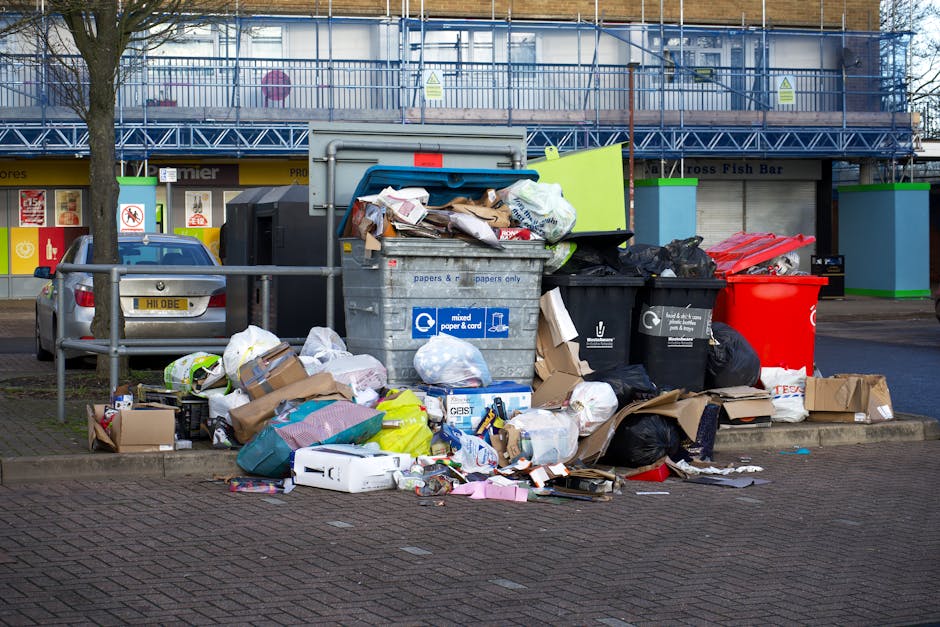
House clearance in Newham should feel organised, respectful and straightforward from the first conversation through to the final sweep-up. We provide a practical clearance service for homes that need unwanted items removed in a planned way, whether that involves a single room, a full property or a mix of furniture, general household contents and awkward bulky pieces. The aim is to make the process easier to manage while keeping the work clear, tidy and suited to the needs of the property.
Our service is designed for customers who need more than a simple lift-and-tip approach. We handle clearances with an eye on separation, careful handling and sensible prioritisation, so usable items, recyclable materials and general waste can be dealt with appropriately. If you are comparing options, pricing and quotes can help you understand how a clearance is usually assessed before you request a quotation.
For many homes, the most useful outcome is not just that items are taken away, but that the property is left ready for the next step. That may mean preparing for decorating, moving out, dealing with inherited contents or clearing accumulated items from a property that has become difficult to manage. Our approach is practical and measured, with attention given to access, item type and how the work needs to be organised on the day.
What our house clearance service covers

House clearance in Newham often involves a blend of items rather than a single obvious load. That can include sofas, beds, wardrobes, tables, white goods, packed boxes, ornaments, books, small electricals and general household clutter. We deal with these items in a structured way so the clearance is not treated as a one-size-fits-all collection. Where suitable, items can be separated for different handling routes rather than being bundled together unnecessarily.
Some properties need a lighter clearance, while others require a more extensive clear-out after a tenancy change, probate arrangement, relocation or a long period of storage indoors. In those cases, the work usually benefits from a plan that takes account of which rooms are involved, whether items must be carried downstairs, and whether any bulky pieces need extra care when being moved. Home clearance is the most relevant route when the job covers several rooms and a broad mix of domestic contents.
We also clear rooms that have become difficult to use because of built-up items, storage overflow or a gradual accumulation of furniture and household belongings. The important point is not just removing volume, but doing so in a way that suits the property and the contents. If a clearance involves one dominant area such as an attic, garage or spare room, the scope can be narrowed to the right type of work rather than treating the whole house as a standard full clearance.
Planning the clearance and arranging access
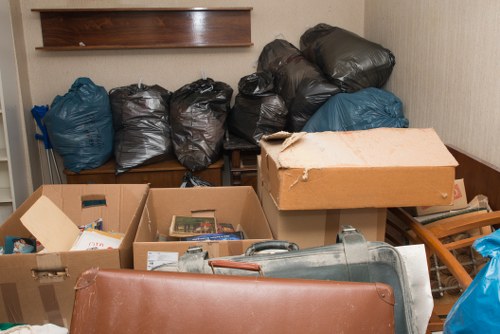
A well-planned house clearance starts with the right information about the property and the items involved. It is useful to know whether there are stairs, narrow corridors, limited parking, basement access or shared entrances, because these details affect how the work is carried out. A brief inventory, a few photographs and an outline of the rooms involved can make it easier to estimate the scale of the job and match the right approach to the property.
Only two practical points usually matter most at this stage: first, what needs to go; second, how it can be reached. If you can note any items that must stay in place, or anything that needs careful handling, that helps the clearance stay organised and reduces the chance of confusion. If you have a clear idea of the rooms to be cleared, contact us to request a quotation and discuss the next step.
Access and timing are often just as important as the contents themselves. Some clearances work best when there is a clear route from the rooms to the vehicle, while others need more measured movement through the property. Good planning does not need to be complicated; it simply needs enough detail to make the clearance efficient, tidy and suitable for the building, the contents and the schedule you have in mind.
Furniture, bulky items and room-by-room removal
One of the main parts of house clearance is handling furniture and other bulky domestic items without turning the job into a rush. Large pieces often need to be taken out in a particular order, especially where doorways are tight or rooms have been filled over time. We can remove items such as wardrobes, beds, sofas, cabinets and dining furniture as part of a broader domestic clearance or as a targeted furniture job where that is more appropriate.
For some customers, the best solution is to combine removal of large pieces with smaller contents from the same room, so the property is left coherent rather than half-cleared. This can be useful when a room is being emptied for a new tenant, prepared for redecorating or made ready for resale. Furniture clearance is a useful option when the main concern is the movement and disposal of larger household pieces rather than a complete property clearance.
Sometimes a room-by-room approach is preferable to a wholesale clear-out. That can apply when some items are to remain in place, when family members are sorting through belongings, or when the work needs to happen in stages. A controlled approach gives space for decisions to be made sensibly while still moving the clearance forward. It also helps reduce unnecessary handling, which matters when items are awkward, fragile or too bulky to shift casually.
Clearances for lofts, garages and storage-heavy spaces
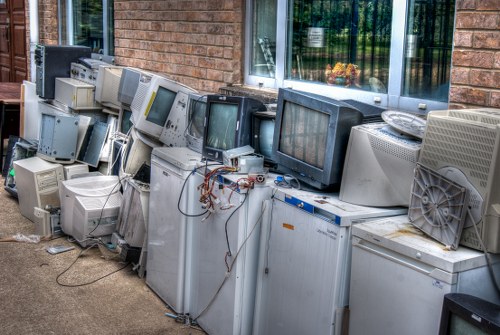
Lofts and garages tend to gather a different mix of contents from the main living rooms, and the practical demands are often different too. Boxes, old luggage, seasonal decorations, broken household goods, sports equipment and stored furniture may all be involved. These spaces are often awkward because of low headroom, limited lighting or difficult access, so the work benefits from a methodical approach rather than a hurried one. Loft clearance is suitable where the upper storage area is the main focus of the job.
For garages, the mix may include tools, shelving, garden items, bags of household material and unused equipment that has simply accumulated over time. The aim is not only to remove what is no longer needed, but to do so without leaving the space half-organised or more cluttered than before. Garage clearance is the more specific service when the clearance is centred on that part of the property.
These storage-heavy areas can affect the whole feel of a house because they are often where overflow ends up. Clearing them carefully can make it easier to regain usable space and see what is actually being kept. Where there are heavier or less manageable items, the method of removal matters just as much as the destination, and it is worth choosing a service that treats those spaces as part of the property rather than as an afterthought.
How we approach disposal and recycling

A responsible house clearance is about more than loading items into a vehicle. The contents of a home usually need to be separated into different categories so that recyclable material, reusable items and general waste are not treated in exactly the same way. That approach is particularly important when the clearance includes furniture, metal items, electrical goods, mixed materials or household items that may need specialist handling rather than simple disposal.
If your clearance involves a broader mix of waste as well as domestic items, it may make sense to compare this with waste removal for jobs where the emphasis is on clearing mixed loads efficiently. For households and landlords, the practical question is often how to remove the right things without creating avoidable waste or unnecessary disruption. A careful method supports a cleaner handover and a more orderly result.
Where possible, we aim to work in a way that keeps the clearance focused on the actual contents of the property. That means considering what is part of the room clear-out, what is simply general waste and what may need separate attention because of its size, material or condition. It is a sensible approach for properties with varied contents, especially when the job includes items that should not be treated as ordinary rubbish.
About Newham
Newham is a borough in east London that combines dense residential neighbourhoods, major transport corridors and a landscape shaped by twentieth-century redevelopment and earlier industrial history. It includes places such as Stratford, Canning Town, East Ham, West Ham, Plaistow, Forest Gate and Beckton, each with its own identity while still forming part of a larger urban borough. The area was created in 1965 from parts of the former county boroughs of East Ham and West Ham, and its later growth was strongly influenced by the redevelopment of the Royal Docks, the arrival of new housing and the transformation of former industrial land into mixed residential and commercial districts. Stratford is now one of its best-known centres, especially since the major regeneration associated with the Olympic Park and the transport changes that followed. The borough also contains important green and waterside spaces, including sections of the Thames frontage, docklands landscapes and parks such as West Ham Park and Central Park in East Ham. Architecturally, Newham ranges from Victorian terraces and interwar suburbs to modern apartment blocks, business districts and large civic and sporting facilities. The area’s character is also shaped by its diversity, markets, places of worship, local high streets and strong connections to rail, Underground, Docklands Light Railway and bus routes. That mix of older neighbourhoods, newer development and active transport links gives Newham a varied urban identity that continues to evolve across its different districts.
House clearance for different property situations
House clearance is often needed at important transition points, and the right method depends on the property rather than on a fixed script. A vacant house, a lived-in family home, a rental flat and a property being prepared for sale can all require different handling. We can support clearances that need to be done carefully around remaining belongings, as well as those where the property is already empty and the work is mainly about removing the last contents efficiently.
There are also situations where the work is shaped by family decisions, moving dates or the need to sort through belongings before anything leaves the property. In those cases, a measured approach is usually better than trying to force everything into a single visit or a rigid process. If the work is focused on one flat rather than a house, flat clearance is a practical page to review because access, layout and the type of contents can differ from a traditional house.
Some properties contain items that are straightforward to move, while others involve bulky furnishings, mixed materials or objects that have been stored for a long time. The clearance service should reflect those differences. That may mean allowing for more careful handling, a more selective approach to what is removed first, or a clearer division between items that stay and items that are meant to go. Flexibility is useful, but only when it is applied in a tidy and organised way.
Choosing the right level of service
Not every clearance needs the same amount of work, and it is sensible to match the service to the scale of the property. Some customers only need a room emptied of surplus furniture and boxes, while others need several rooms cleared so the home can be handed over or prepared for the next stage. The right level of service should reflect the contents, access and outcome you want, rather than forcing the same method onto every job.
Where the job overlaps with other domestic clearances, it can help to think about what matters most: the household contents, the layout of the property or the speed at which the space needs to be handed back. For a more general domestic job, house clearance remains the central service, while more specialised pages are useful when the main task is centred on a loft, garage, furniture or another defined area of the home.
It is also worth remembering that a good quotation depends on practical detail, not guesswork. Items of similar size can still require very different handling depending on weight, access and how they are positioned in the property. Giving a clear picture of the work helps avoid uncertainty and makes it easier to compare the right service options on a like-for-like basis.
Requesting a quotation for a house clearance
When you are ready to request a quotation, the most helpful starting point is a short description of the rooms, the main item types and any access points the team would need to use. That can be enough to frame the job accurately, especially when the clearance is a mixture of furniture, household contents and general domestic material. A well-prepared quotation is easier to understand because it is based on the real shape of the work.
If you are comparing several services, it may help to look at the supporting information on about us and recycling and sustainability so you can understand the wider approach before arranging the work. The key is to choose a service that is clear about what is being removed, how the clearance is organised and what type of property the job involves. That makes the quotation process simpler and more relevant.
If you need house clearance in Newham and want a straightforward next step, send the details of the property and the items to be removed, then ask for a quotation. We can help with clearances that need careful handling, sensible sorting and a tidy finish. Request a quotation when you are ready and use the contact route that suits you best.